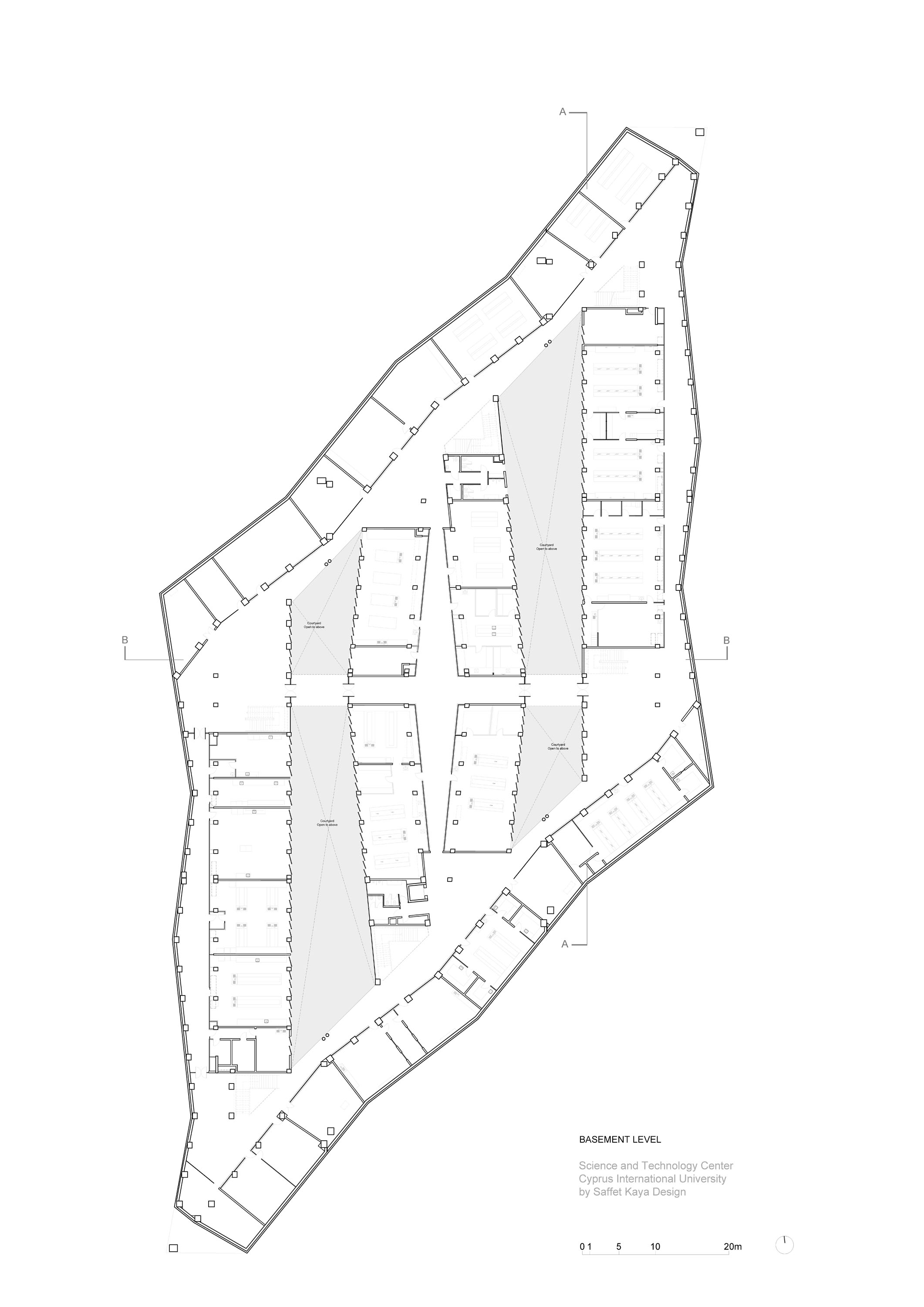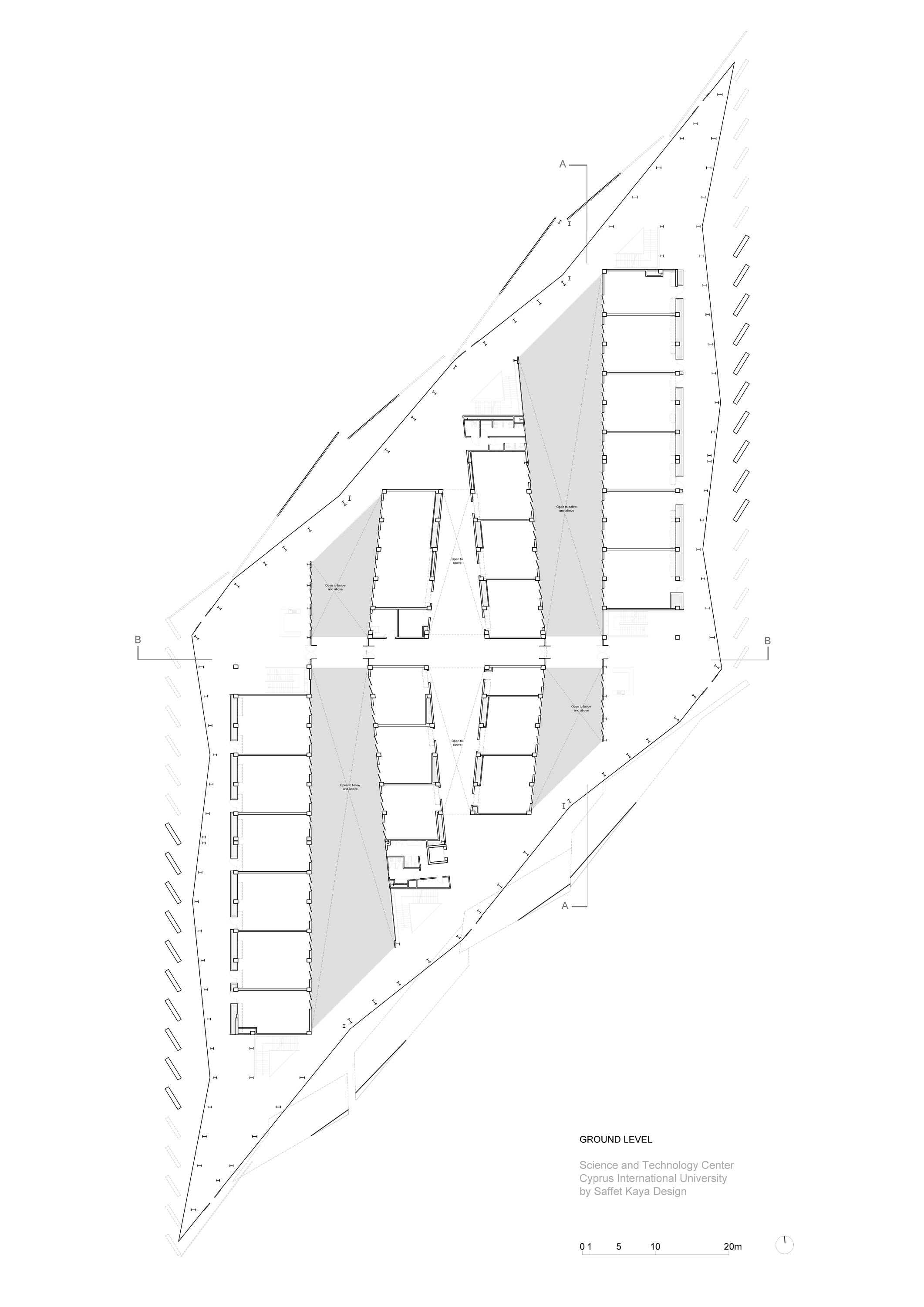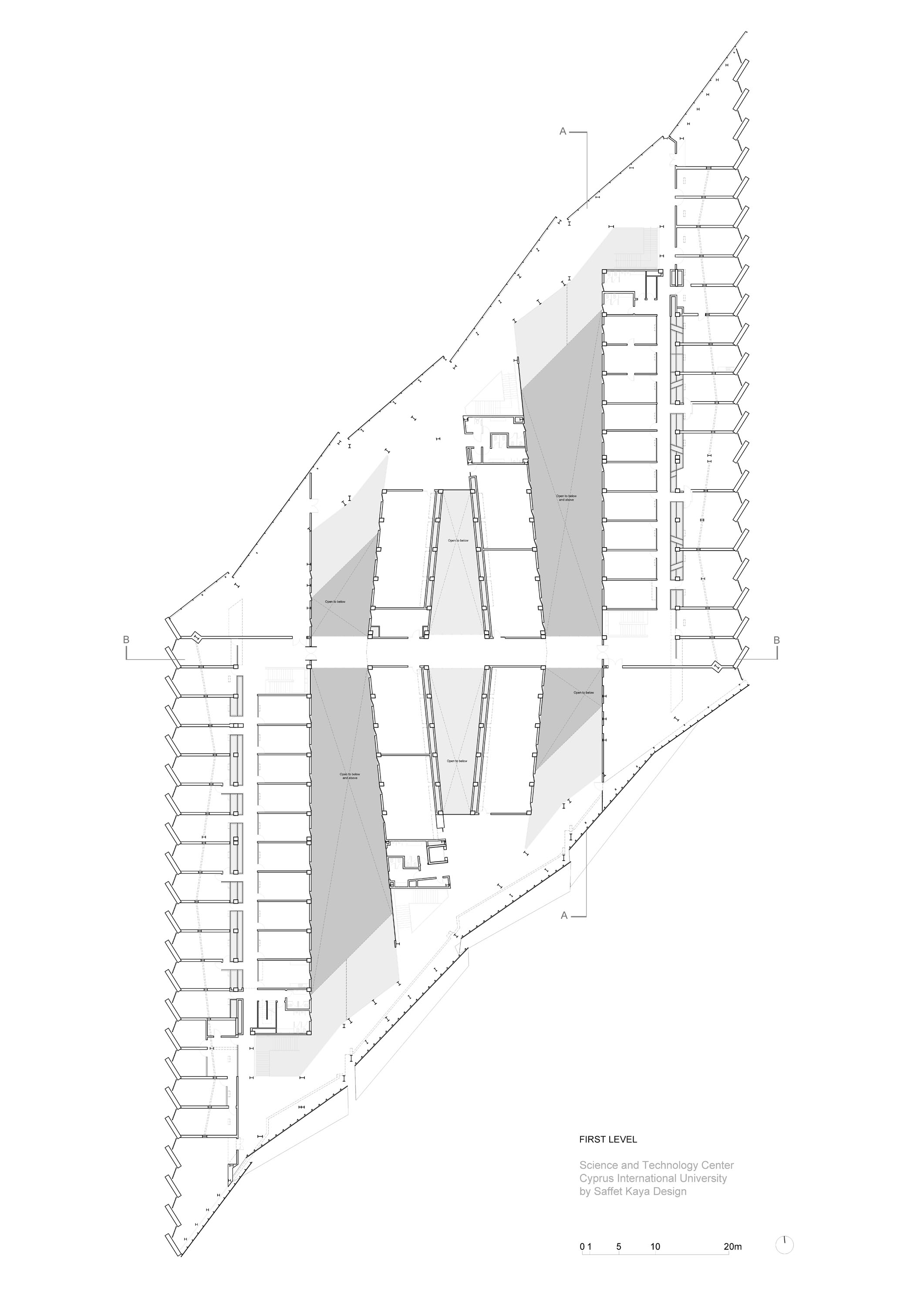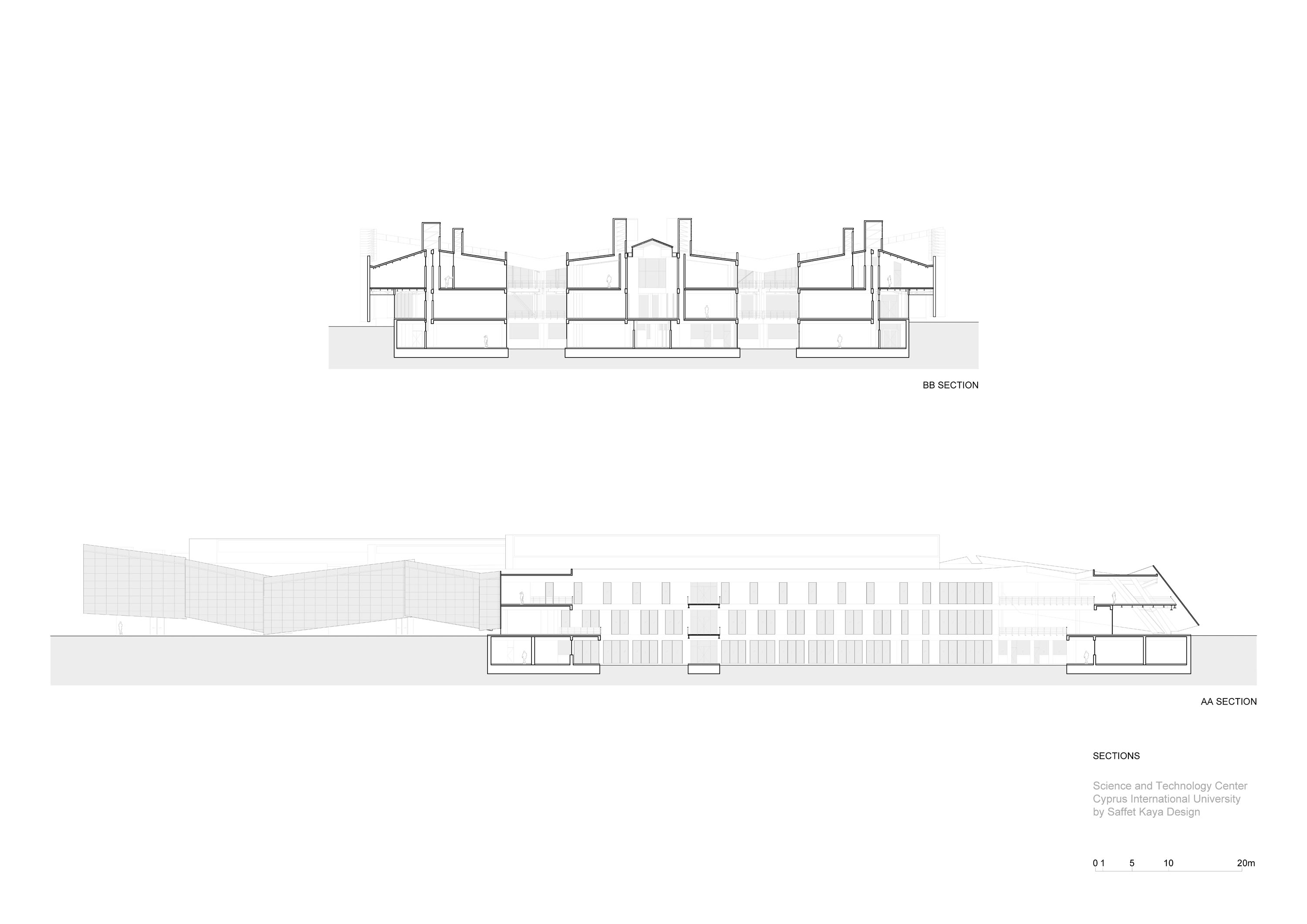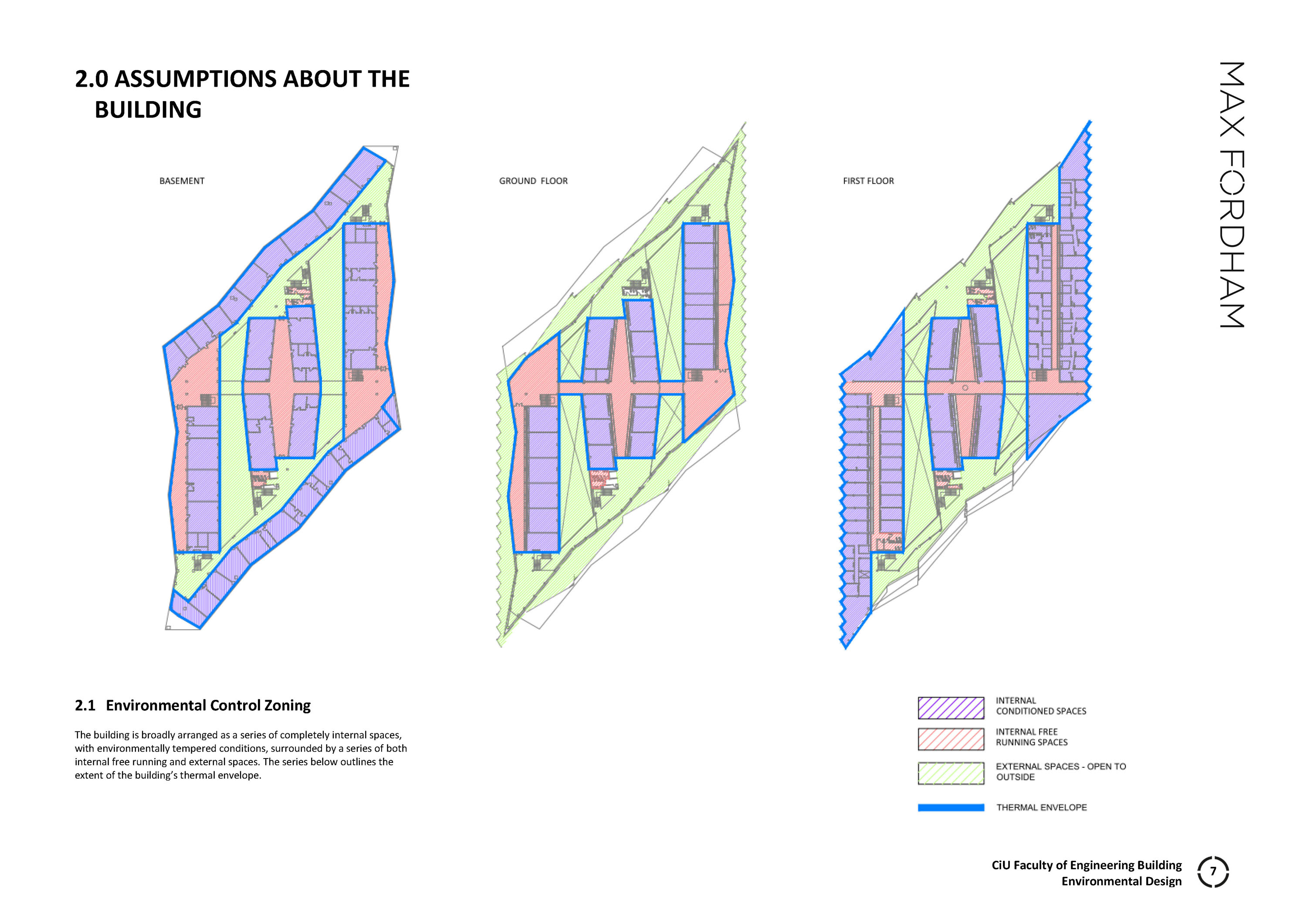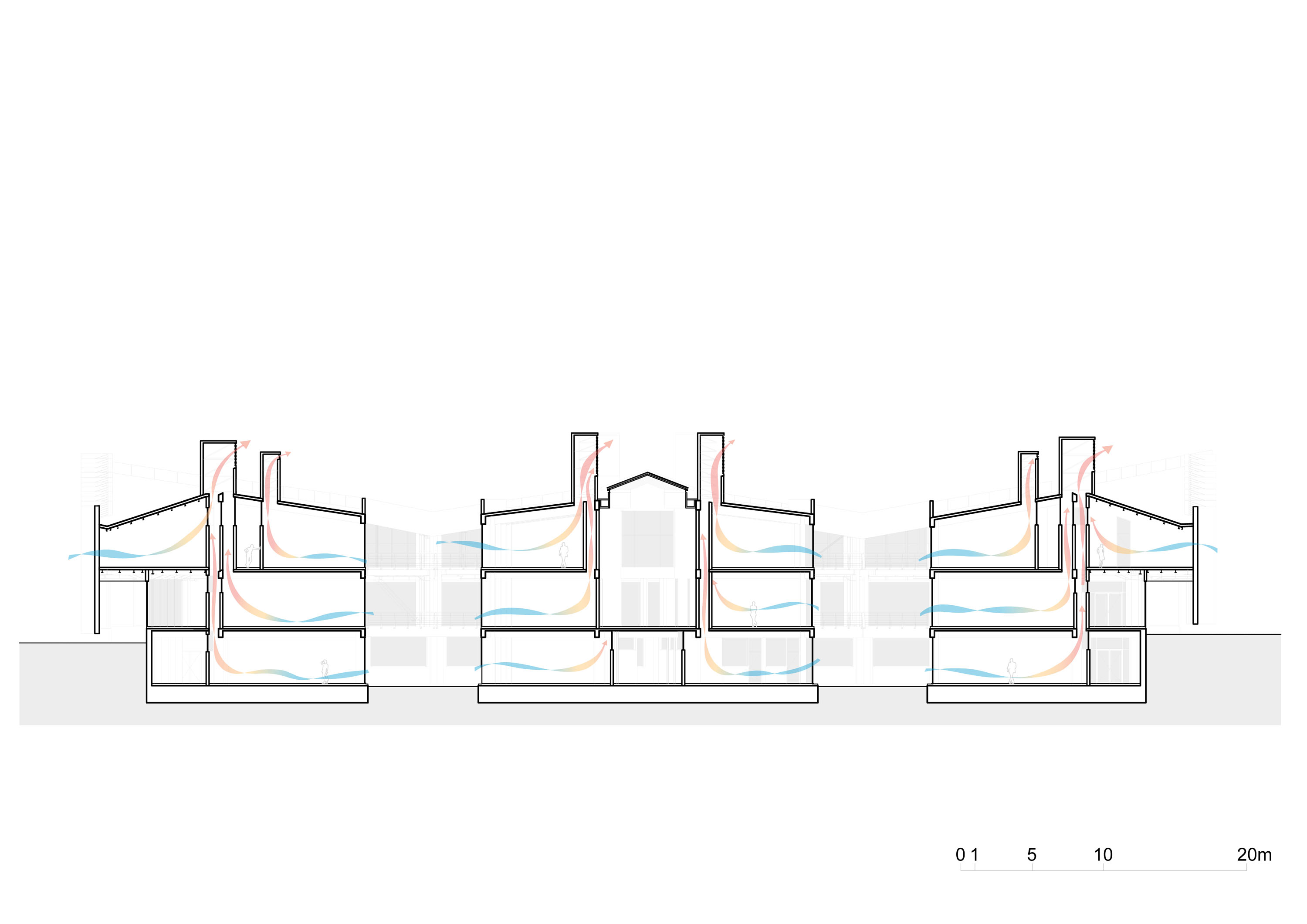
Technology Centre, approximately 16.000m2, houses many engineering faculties since completed in 2018. Located in the campus, the faculty being three stories has two internal courtyards. Classrooms and laboratories are strategically located between internal courtyard, where facade with controllable facade openings (with high level of automation system) and architectural chimneys (ventilation shafts) located opposite side of the rooms along the corridor. This architectural cross-section allows to generate natural cross ventilation. Enabling study rooms to be conditioned passively, helping in energy saving and sustainability.
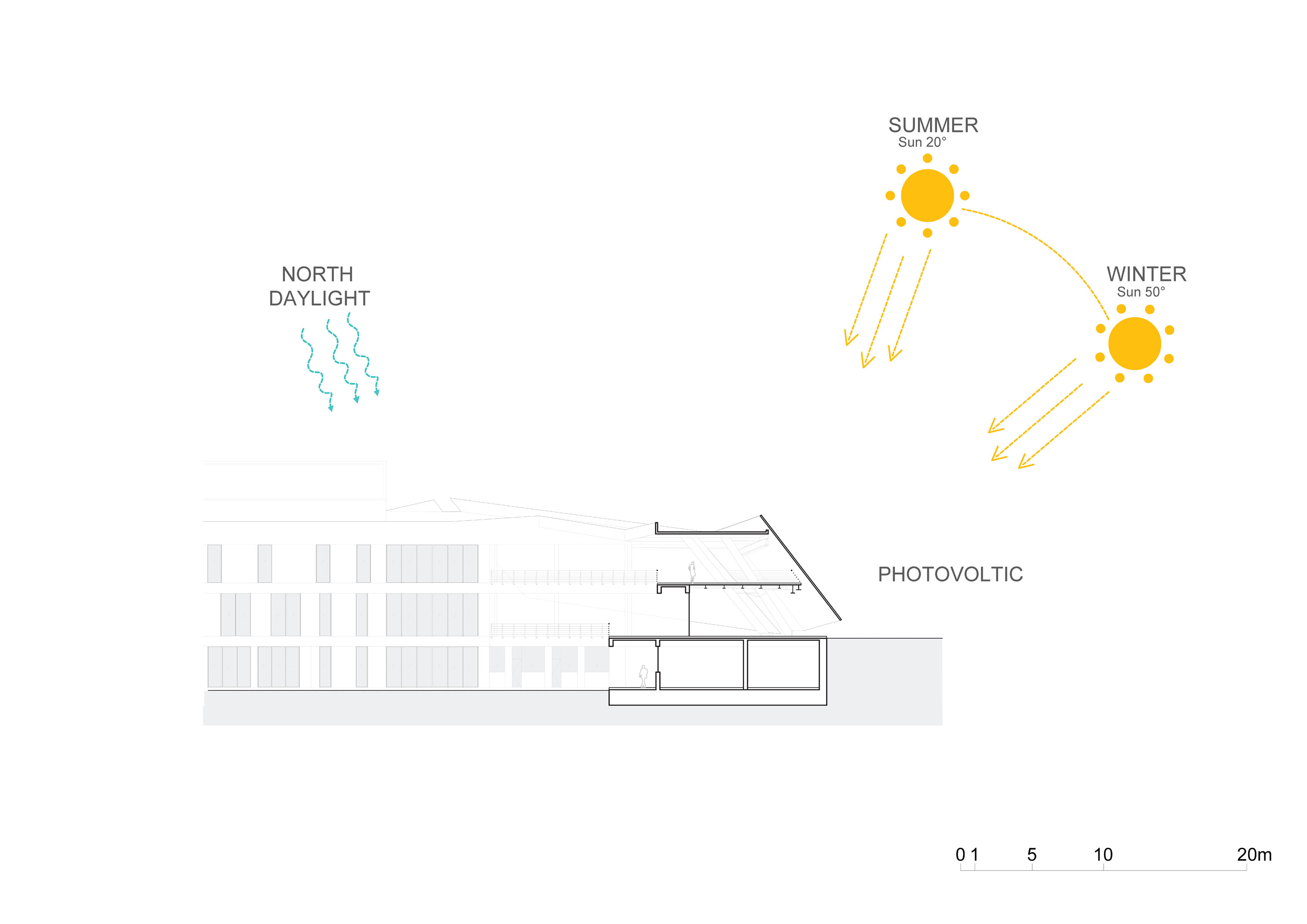
Each facade has different and unique strategies corresponding to the direction and the need. Buildings south facade being angled to maximise solar gain which is fully cladded with Photovoltaic panels (BIPV). North facade, not receiving any direct light, is cladded with all glass allowing natural light while giving x-ray effect. West and East louvered facades openings angled towards North to get protected from Southern light.
Architectural design of the Technology Centre emphasizes the rational/smart beauty of machine aesthetics by exposing all engineering tectonics. With its dynamic architectural and engineering composition/order, this building celebrates how different disciplines complements by co-existence/collaborating. To bring the best in each other creating a manmade environment for users comfort while offering an alternative perspective.
Technology Centre, being a green building, generates energy with photovoltaic panels for it’s use and supplies rest for campus grid, taking advantage of Cyprus sunny climate. Climatic performance of the building has been designed and control by taking environment context into consideration: solar flux/radiation, wind, environmental tempered conditions...etc. Passively operated system like large quantities of outside air can be used to ventilate the internal spaces during both day and night from their local facades.
Generally, the building performs quite well passively during these times of the year, neither the ground ducts nor the cooling system need to run. The facade openings provide variable quantities of fresh air depending on the requirements of the space. Facade openings are generally left open at night to pre-cool the fabric.
A college campus is emerging on the plains of Cyprus with the backdrop of the Kyrenia Mountain range. The University’s Science and Technology Center, celebrates the contour of the mountain range in a transparent fashion.
The building consists of 4 separate units (solid masses or volumes) joined with 2 internal courtyards and an atrium, which is completely wrapped with an intelligent transparent envelope. Each side elevation is independent from the other in design and new technologies such as photovoltaic cladding panels are introduced in Cyprus for the first time. This complex offers 22 Classrooms and 33 Research and Education lab oratories that are strategically located between these 2 internal court yards and an atrium, a space totaling approximately 16,000m2.
The design allows different departments and their students to inter act with each other, in a climatically controlled environment within the campus.
The South façade of the building is angled and fully cladded with second generation thin film photovoltaic panels called BIPV (Building-integrated photovoltaics) to maximize solar gain. The enclosed spaces are equipped with controllable façade openings with a high level automation system and thermal solar chimneys (ventilation shafts) located at opposite sides of the rooms along the corridors, to provide natural cross ventilation, enabling energy saving and sustain ability. The North facade, which does not have any direct light, is cladded with all glass structure allowing natural light in, while giving an x-ray effect. The West and East façades have louvered facade openings that are angled towards North to prevent direct solar radiation. The Climatic performance of the building has been designed and con trolled by taking environmental context into consideration: solar flux/radiation, wind, environmental tempered conditions…etc. It is also possible to passively ventilate the internal spaces during both day and night, from each façade allowing outside air to enter the space. The architectural design intends to emphasize the aesthetic that science and technology brings into architecture. By exposing structure, mechanical ducts, wiring of panels, materials and how all tectonics come together, our architecture celebrates the intermarriage of art and science.
Saffet Kaya Bekiroglu
Saffet Kaya Architects
Energy system concept and advisor: Harald N. Røstvik
Mechanical Concept: Max Fordham
Mechanical Engineer: Mustafa Dagbasi
Electrical Engineer: Gürcan Kara
Steel Structural Engineer: Uluğ Cam
Construction: Yasar Gundeger, Ceren Ulter (DRN)